Summary
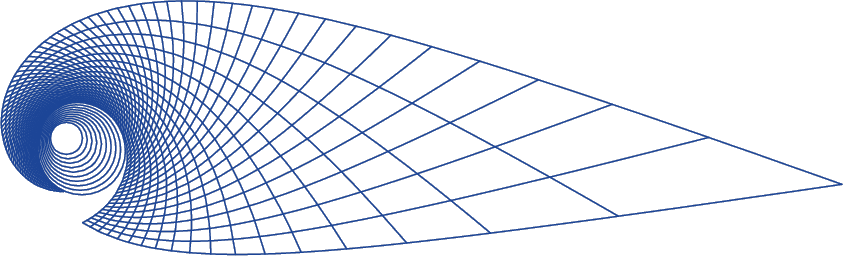
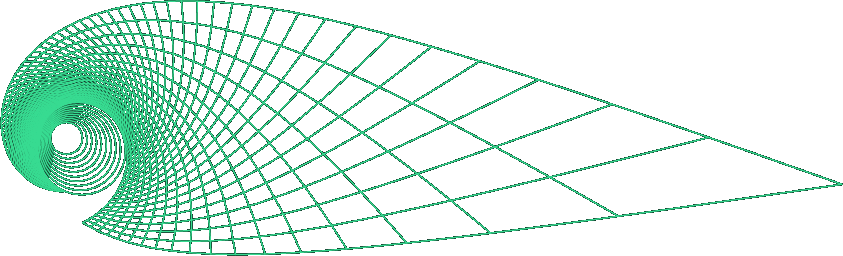 The Geometric Siphon shows that concentrated liquidity rebalancing is not geometrically closed. Each passage from one tick range to the next leaves a residual implied directly by the V3 amount equations, a remainder spawned by curve shape itself. Under shared depositor balances that remainder no longer reads as slippage in its originating pool, but routes between positions in independent pools, channelling capital across the portfolio at every rebalance. Six theorems characterise the residual geometry in closed form, a 16-test Foundry suite verifies them against unmodified V3 contracts on Base, and two operational datasets anchor the existence and directional claims.
Abstract
This paper identifies and formalises the Geometric Siphon, a previously undocumented mechanism arising from concentrated liquidity rebalancing geometry and made observable across positions by shared depositor balances. When autonomously rebalanced positions share a token balance, token ratio mismatches between old and new tick ranges route residual tokens through that shared balance, transferring capital between positions in independent pools. Six theorems characterise the mechanism. They establish a closed-form residual with an iff vanishing condition, convergence in expectation for same-pool positions sharing a contract balance, and geometric extinction without swap correction. On volatile/stablecoin pairs in V3 ordering, they also establish strict residual monotonicity in displacement together with USD-denominated directional and exit asymmetries. A graph-theoretic Connector Rule relating per-pool flow to portfolio topology is stated as a conjecture. A 16-test Foundry suite verifies all six theorems against unmodified V3 contracts on Base mainnet. Empirically, a 1,380-event controlled dataset supports the existence claim, contains a complete USDC/ZARP extinction lifecycle, and includes an observed single-pool convergence episode. A separate 35,910-event production-scale dataset spanning five independent portfolios replicates the directional asymmetry in every portfolio, the exit asymmetry in four of five, and exhibits the predicted sign flip in the largest portfolio’s reversed-ordering negative control.
The geometric residual
A rebalance withdraws liquidity from range and mints into at the same current sqrt price . From the Uniswap V3 amount equations, the residual fraction vanishes if and only if old and new ranges demand the same token ratio at .
Here is the token ratio a range demands at the current price. Equal ratios redeploy the withdrawn tokens in full; unequal ratios leave a strict surplus of one token that exits the mint as dust.
In a vault-per-pool architecture the surplus stays in the pool that produced it and reads as small slippage. Under a depositor level shared balance it crosses pools, and the shared balance becomes the channel through which the siphon transfers capital across the portfolio.
Zero-swap extinction
Without swap correction at each rebalance, a position decays geometrically. Let be the residual fraction lost on cycle . After zero-swap rebalances,
In pools with swap routing the rebalance contract’s internal swap absorbs roughly 94% of each cycle, leaving 6% as net dust and keeping positions inside the convergence basin of Theorem 2. When swap routing is unavailable, as on a stablecoin pair with no DEX path, the damping is absent and the full residual leaks each rebalance. A USDC/ZARP position observed in the empirical record fell from $942 to $1.59 in 14 zero-swap rebalances.
Exit asymmetry
Past the range boundary the position is single sided. In V3 ordering on a volatile/stablecoin pair, an above-exit holds only the stablecoin and retains full USD value, while a below-exit holds only the depreciated volatile asset. With the prevailing price and the range boundary prices,
The denominator is the geometric mean of the range boundaries, the price at which the LP’s range is centred in price space.
Below-exit value, normalised to above-exit, therefore equals the prevailing price divided by the geometric centre of the range, bounded above by at the boundary and falling to zero as the price approaches zero. The asymmetry is numéraire dependent; in token0 units the inequality reverses.
Cite as
@techreport{ryan2026geometric,
  author      = {Ryan, K. R.},
  title       = {The Geometric Siphon: Existence, Equilibrium, and Directional Properties of the Residual in Concentrated Liquidity Portfolios},
  institution = {SSRN},
  type        = {SSRN preprint},
  number      = {6686798},
  year        = {2026},
  month       = apr,
  doi         = {10.2139/ssrn.6686798},
  url         = {https://papers.ssrn.com/sol3/papers.cfm?abstract_id=6686798},
}